Black Shiny Puffer, Gray Hoodie and Belt Display Review
Marcus Delgado · Editor in ChiefMarcus Delgado is Editor in Chief, covering Air Jordan silhouette history, retail launch timing, size-run fit mapping, and final score calls. They buy at retail where possible and use buying agents otherwise, filming the unboxing and checking the box label against the size tag. Marcus sets the final hands-on score after each ten-day wear block, with testing including 20 km of city pavement and a flex-cycle stress test they conduct personally. They sign off on the comparison table against two prior-year equivalents, connecting fit judgments, wear records, and comparisons.
A black shiny puffer jacket, a light gray zip-up hoodie, and two belts in different styles are arranged together to create a clear contrast between dark and light tones. This setup works well as a reference for fall and winter clothing displays: establish the main color first, then add dimension through material sheen, lining patterns, and small accessories. ## Color Relationships: Start with Black and Gray, Then Add Small Contrasts The black puffer jacket carries the visual weight of the compos
Redaktionsnote 4.2 / 5
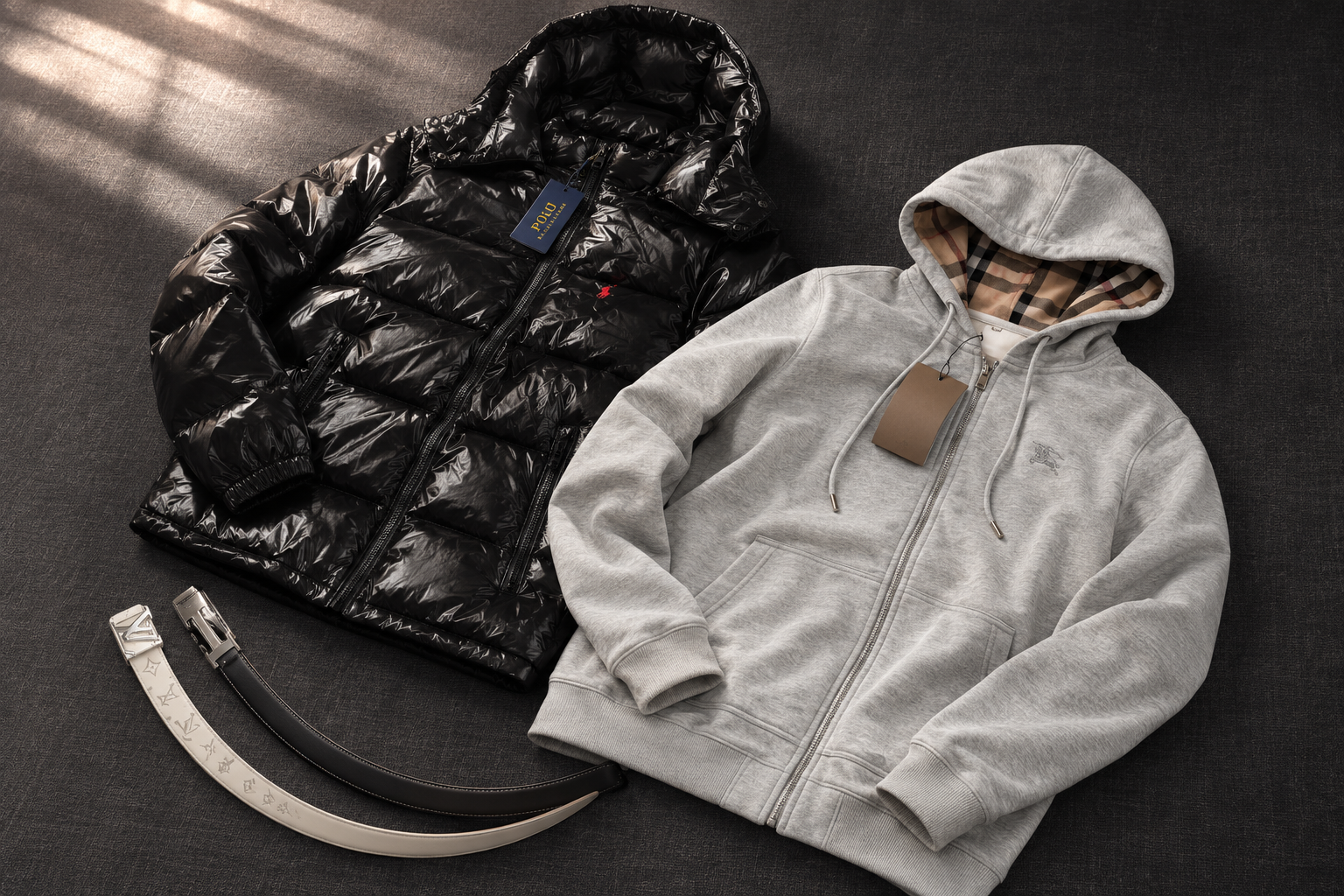
A black shiny puffer jacket, a light gray zip-up hoodie, and two belts in different styles are arranged together to create a clear contrast between dark and light tones. This setup works well as a reference for fall and winter clothing displays: establish the main color first, then add dimension through material sheen, lining patterns, and small accessories.
Color Relationships: Start with Black and Gray, Then Add Small Contrasts
The black puffer jacket carries the visual weight of the composition. Its horizontal quilting and shiny shell reflect light, keeping the solid black from looking flat, though folds and highlights can also obscure some details. Paired with the light gray hoodie, the dark outerwear and gray mid-layer create a noticeable difference in brightness, making the clothing silhouettes easier to see.
The gray hoodie has a soft, muted tone that can reduce the visual heaviness of the black puffer. For everyday outfits, you can continue with a basic black, gray, and white palette, then introduce low-saturation brown, silver, or navy through shoes or bags to keep the overall look cohesive.
The two belts provide accents in different directions: the black belt connects with the jacket's color, while the white patterned belt becomes a more noticeable light-colored element. For a more restrained look, keep only the black belt. If you want more streetwear character or a stronger focal point, choose the white patterned style, but keep complex patterns on other accessories to a minimum.
Clothing Pairing: Use the Hoodie as a Visible Mid-Layer
The gray hoodie is a zip-up style with drawstrings, two slash pockets, and ribbed cuffs and hem. It works as a layer under outerwear or as a casual top on its own. When paired with the black puffer, let part of the hood, front placket, or hem show to create a gradual transition from light to dark.
The plaid lining inside the hood adds a touch of pattern to the outfit. Because the plaid appears only in a small area, it does not break up the composition with an oversized pattern. The small chest embroidery is also a localized detail that works with the clean black-and-gray palette. When styling the pieces, let these details show naturally without adding another large graphic print underneath.
The black puffer's horizontal quilting, flap pockets, drawstring hem, and adjustable hood all have a strong structured look. To balance this substantial visual weight, choose straight-leg or slightly relaxed dark pants. If you want the outfit to feel lighter, use light gray, cream, or faded blue bottoms to create more color separation. A flat-lay image alone cannot determine the actual fit when worn, so the proportions of the bottoms should be adjusted according to the specific measurements.
Display Method: Create a Clear Hierarchy Among the Main Piece, Supporting Piece, and Accessories
The key arrangement principle in this flat lay can be summarized as "place the main piece in the center, create a diagonal with the supporting piece, and keep the accessories near the edge." The black puffer sits on the left side of the image, while the light gray hoodie extends toward the right, balancing the two garments in size and color. The belts sit below, filling empty space while guiding the eye from the jacket toward the accessory area.
To recreate a similar display, arrange the pieces in this order:
- First spread out the largest and darkest outer layer to establish the main subject.
- Next place the light-colored hoodie, keeping the hood, zipper, and cuffs clearly visible.
- Arrange the belts along natural curves instead of letting them cut across the composition in perfectly straight lines.
- Keep only one or two patterned or light-colored accessories as visual focal points so they do not compete with the clothing details.
- Adjust the cuffs, hood opening, and hem so that the ribbing, drawstrings, and quilting lines remain spread out and visible.

Detail Observations and Styling Trade-Offs
The zipper pull, cuff finishing, and quilting lines on the black puffer are relatively complete in the image. Its shiny material makes it a more attention-grabbing outer layer. The zipper, stitching, ribbed edges, and small chest embroidery on the light gray hoodie are also clear, making it well suited to soften the overall color palette.
If the goal is a clean smart-casual office look, pair the black puffer with the gray hoodie and black belt, while keeping the shoes and bag in black or dark gray. If the goal is a more contrasting casual outfit, keep the white patterned belt and let the plaid hood lining or other small light-colored details show naturally. Both approaches should limit the number of decorative elements and avoid using too many bold patterns at once.
Keep in mind that a single flat-lay image can only help assess color, structure, and display relationships. It cannot confirm the worn fit, actual size, warmth, material composition, weight, durability, or washing performance. Logos and patterns in the image can only be described by their visible appearance, and the image cannot be used to determine a specific model or authenticity.