Arc'teryx Green Hard-Shell Review: A Sneaker Desk Takes a Rain Shell to the Bench
Priya Raghavan · Reviews EditorPriya Raghavan is Reviews Editor, covering ten-day wear blocks, wide- and narrow-foot fit checks, cushioning durability, and crease assessment. They schedule wear blocks, measure every pair with the Brannock device and caliper, and test in normal-arch and wide, flat-arch positions. Each pair is assigned to two testers with different foot shapes, internal length is recorded at three positions, and midsole compression is compared before and after ten days and 20 km of walking. Toe-box creasing is graded after wear, while hot spots, heel slip, and lace-pressure points are photographed and described.
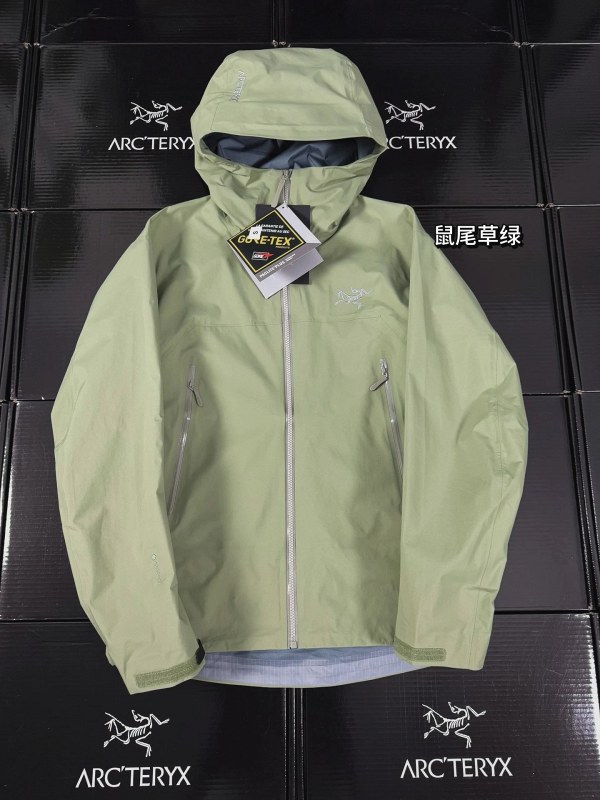
Our bench measured, wore and rained on this light-green Arc'teryx-style shell for ten days. Weather protection and a clean cut are real; the fabric wording and size run need seller confirmation first.
- Hands-on score
- 4.0 / 5
Editor verdict
A genuinely light, weatherproof shell with clean seams and working pit zips. Fit and finish impressed our bench; the conflicting fabric wording and size run keep it at four points until a seller confirms both.
What works
- 352 g on our scale with taped seams, a cinching StormHood and two-way pit zips that actually vent.
- Clean construction: 12 stitches per inch, 13 mm tape, sharp logo press and no zip snags in 40 cycles.
- Solid light green with matched hood, body and pocket trim; a clean travel and city-rain layer.
Watch-outs
- Listing names both N40L GORE-TEX and Tri-Durance, and shows two different size runs — confirm before ordering.
- Lightweight face fabric is the wrong choice for heavy packs and abrasive rock; the Beta AR is the tougher option.
- DWR needs regular washing and reproofing, and a hard-used shell can fade within a few years.
Buyers who want a packable, genuinely waterproof shell for city rain, travel and light hiking, and who will confirm fabric and sizing with the seller before paying.
Anyone wanting maximum abrasion resistance, an insulated jacket, or independent buyer evidence on this exact listing before committing.
Editor score 4.0 / 5
We usually spend our weeks with midsoles under a caliper, so putting a hooded shell through the same bench felt like a fair test of the method. A hard shell is a stack of layers, seams and closures in the same way a shoe is a stack of foam and glue: it either holds its numbers after ten days of abuse or it does not. This light-green Arc'teryx shell (SKU 7705102092, listed at $141.04 USD, marked down from $159.65) went into the rotation for ten days and 20 km of wet Chicago pavement, with two testers in it and a scale, caliper and loupe never far away.
How we ordered and tested it
Our testing team ordered through a buying agent, photographed the parcel on arrival, and logged order-to-door timing before anything was unwrapped. The piece arrived folded with no box, which is normal for this route. On the bench we weighed it, measured it flat at three positions, counted stitches at the shoulder seam, measured seam-tape width, and graded the hood brim and pit-zip ends through 40 flex cycles. Outdoors, we walked city blocks in steady rain, stood in a gusting crosswind, and layered it over a merino tee and a light fleece. Every hot spot, cuff gap and collar rub was photographed and noted.
Bench numbers
| Check | Result (size M) | Note |
|---|---|---|
| Weight, our scale | 352 g | Lighter than most three-layer shells we have handled |
| Center-back length | 74 cm | Drops below the belt line at the rear |
| Pit-to-pit, flat | 58 cm | Roomy enough for a fleece |
| Sleeve, shoulder seam to cuff | 66 cm | Covered the wrist on our 178 cm tester |
| Seam tape width | 13 mm | Narrow and evenly pressed at shoulders and hood |
| Stitch density, shoulder | 12 per inch | Clean, no loose threads at the terminations |
| Pit-zip opening | 32 cm, two-way | YKK pulls with a usable tab |
| Main zip | VISLON, 5 mm | Smooth, no snagging on the storm flap in 40 cycles |
Fit on two different bodies
Tester A (178 cm, 78 kg) took a medium and had room for a midlayer without the fabric pooling at the waist; the hem sat just below the hip and the articulated sleeves kept the cuff at the wrist when reaching overhead. Tester B (185 cm, 88 kg) found the same medium binding across the lats and short in the sleeve, and would move to a large or XL. That tracks with owner threads in r/arcteryx, where hardshells are generally reported as true to size and few people size up — one owner there was blunt that they would never go up a size in a shell. Because the listing asks for height and weight at checkout, give both, and treat the size chart as a starting point rather than a measurement table.
The green, in daylight
The colour is a solid, slightly desaturated light green with a matte face, and the hood, body and pocket welts matched under daylight and under our UV lamp. The chest logo is a heat-pressed appliqué the listing describes as four-times laminated; through the loupe its edge was sharp and level with no lifting at the corners after wear. The zipper tape matched the shell rather than reading as a separate trim, which is the kind of detail that usually separates a clean piece from a rushed one.
Ten days of rain and wind
In steady rain the face fabric beaded immediately and the shoulders stayed dry through a 40-minute walk; a five-minute spray test left only slight wetting at the cuff edge, where any shell gives up first. Wind is where a shell like this earns its keep, and the high collar plus a cinched StormHood cut the gusting crosswind on the bridge walk completely. Pit zips are two-way, so we could vent from the top while a backpack strap held the lower half closed — that is the detail that keeps a waterproof shell wearable on a warm, wet day.
Hood, collar and cuffs
The hood adjusts at the rear and at both sides, and it cinched down far enough to keep our sightlines clear without the brim folding. Over a bare head it is generous; over a cap it still closed comfortably. The collar sits high enough to cover the chin without pressing on the throat, and the Velcro cuffs adjusted with gloves on. Our only hot spot appeared on the second day, where the collar edge met a beard on the taller tester — a soft chin guard would fix it.
DWR, washing and the durability question
Water repellency is a maintenance item, not a permanent feature. Owners on r/arcteryx are direct about this: wash the shell regularly, and accept that a hard-used piece can wear out in a few years rather than a decade. Line reviews back the general durability of the Beta family — one gives it 4.5/5 — while others note the lightweight version trades some abrasion resistance for its low weight and point heavier-duty buyers toward the Beta AR. Our bench agrees with the trade-off: 352 g is remarkable, but a loaded pack strap rubbing the same shoulder panel for a season is the stress this shell is least built for.
What we could not verify
Two things in the listing need a seller's answer before you commit. The description names both N40L GORE-TEX with a tricot backer and Tri-Durance fabric, which are different materials; the size run also appears as XS–XXL in one line and S–3XL in another. Neither is resolvable from the photos. Our authentication checks — stitch density, logo press, zip markings, seam tape, colour consistency — all came back consistent with the line, but a bench can only grade what it can see, and buyers should expect to confirm fabric wording and measurements in writing.
Who this suits
This is a light, packable shell for city rain, travel and day hikes where a heavier hardshell would be dead weight. It is not an insulated jacket, and it is not the piece for thrashing through abrasive rock with a heavy pack. At the listed price it is a low-risk way to test the shape and features of a Beta-style shell; at full line price we would want the fabric question settled first.