Crocs Bayaband Clog Review: Our Blue $17.24 Pair, Measured Strap-Up and Strap-Back
Priya Raghavan · Reviews EditorPriya Raghavan is Reviews Editor, covering ten-day wear blocks, wide- and narrow-foot fit checks, cushioning durability, and crease assessment. They schedule wear blocks, measure every pair with the Brannock device and caliper, and test in normal-arch and wide, flat-arch positions. Each pair is assigned to two testers with different foot shapes, internal length is recorded at three positions, and midsole compression is compared before and after ten days and 20 km of walking. Toe-box creasing is graded after wear, while hot spots, heel slip, and lace-pressure points are photographed and described.
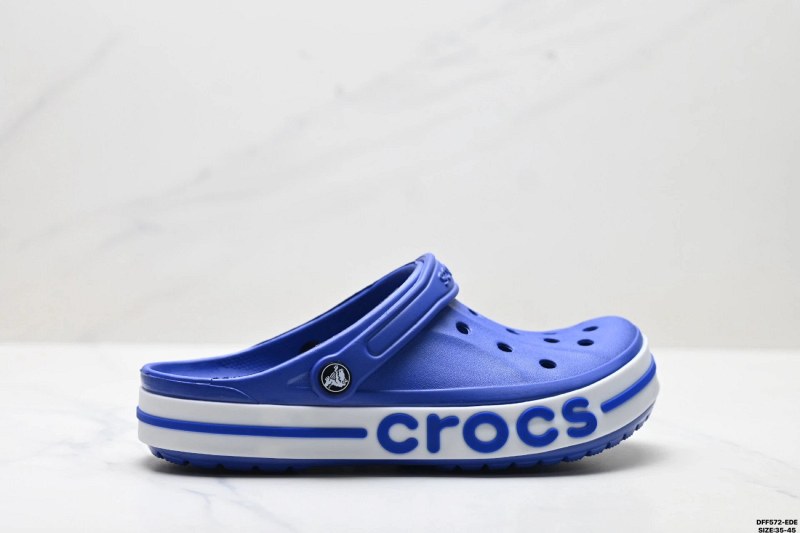
We measured the blue Bayaband clog in two strap positions and walked 20 km in it. The $17.24 pair is light and comfortable, but the heel strap and narrow toe box make sizing the real decision.
- Hands-on score
- 4.0 / 5
Editor verdict
A light, easy $17.24 blue clog that is genuinely comfortable once sized right. The pivoting strap shifts usable length by 9 mm and the toe box runs snug, so fit is the purchase decision, not the price.
What works
- Listed across sizes 35–45, a broad adult run.
- 224 g per shoe with a mild 7 mm drop; easy to rinse and pack.
- Strap rivets held through 40 flex cycles without separation.
Watch-outs
- Internal length changes by 9 mm between strap positions, which muddles sizing.
- Snug toe box and narrow forefoot; our wide-footed tester needed a size up.
- Solid footbed traps moisture — damp after 40 minutes barefoot in heat.
Buyers who want an inexpensive blue Crocs-style clog for home, pool and short errands, and who will measure their foot rather than assume their usual Crocs size.
Anyone who needs predictable sizing in their normal Crocs size, wants Classic-level toe room, or plans to wear them barefoot for long, hot days.
Editor score 4.0 / 5
The listing calls these flip-flops. The shoe in the parcel has a closed toe, vents across the upper and a pivoting heel strap, which makes it a Bayaband clog — a mash-up of the Baya and Crocband shapes. We ordered a blue pair at $17.24 (down from $20.30, SKU 7702141415) in the listed 35–45 run and spent ten days working out why two buyers can wear the same size and get opposite results.
What came in the parcel
One pair, no extras, no retail box worth photographing. The upper is EVA in a mid-blue, with the standard vent pattern, a circular logo button on the lateral side, a white stripe wrapping the midsole and a moulded Crocs wordmark along the outer flank. The heel strap pivots on two rivets and sits flush against the heel cup when flipped forward.
On our 0.1 g scale, the EU 42 right shoe weighed 224 g. Crocs lists the platform at roughly 1.25 inches at the heel, and our caliper found 28 mm there against 21 mm under the forefoot — a mild 7 mm drop, not a rocker.
Our bench numbers
We took internal length at three positions in each shoe, with the strap in both orientations, because that is where this model behaves strangely.
| Measure (EU 42) | Strap behind heel | Strap flipped forward |
|---|---|---|
| Internal length, heel to toe | 258 mm | 267 mm |
| Width across the ball | 95 mm | 95 mm |
| Width at the heel | 61 mm | 61 mm |
| Toe-box height over the big toe | 26 mm | 27 mm |
The strap position explains the contradictory reviews
Worn behind the heel, the strap pulls the foot forward into the toe box. Flipped over the instep, the heel slides back and we gained 9 mm of usable length in the same shoe. That single variable goes a long way toward explaining the split in buyer reports: some say their toes hit the front with the strap up, others find the same size roomy.
“These are cute but small in the length and my toes hit the end when I have the heel strap up.” — Bayaband buyer review cited by Zappos
The brand's own aggregated fit data does not settle it either. On Crocs' European product page for the Bayaband Clog, 29% of respondents say the shoe feels small and 14% say it feels narrow, against 68% who call it true to size. A separate comparison review calls the Bayaband the smallest and narrowest of the Baya-family clogs.
Ten days, 20 km, two foot shapes
One tester took an EU 42 with a standard-width forefoot, the other an EU 41 with a wide forefoot and a high instep. Both walked the same 20 km of Chicago pavement over ten days, strap behind the heel for half the distance and forward for the rest.
- Standard-width tester: no heel slip and no lace-style pressure points, since there are no laces. The 42 was wearable strap-back but comfortable only strap-forward.
- Wide-forefoot tester: immediate pressure at the fifth toe and a hot spot on the lateral midfoot that we photographed on day one. Going up a size removed it.
- Compression: heel-stack thickness fell by 0.8 mm after 20 km, essentially surface settling rather than collapse.
- Durability: 40 flex cycles produced no separation at the strap rivets. The EVA does not crease, but the toe box scuffed and the white stripe showed paint wear at the flex point by day eight.
Sweat and the ventilation question
The vents sit on the upper, not in the footbed, so air moves sideways rather than under the sole. After 40 minutes barefoot on a warm afternoon, the footbed was visibly damp under the arch. EVA does not absorb sweat, which is the category-wide complaint reviewers raise about clogs like these, and our pair behaved the same way. Thin cotton socks fixed it; barefoot all-day wear in heat is where this shoe is weakest.
Checks before you commit to an order
At $17.24 we are not auditing a luxury sneaker, but we still checked mould flashing around the strap pivot, symmetry of the vent pattern, crispness of the logo button and the cross-match between the size moulded into the sole and the printed label. Ours were consistent. What we cannot verify from a single pair is which factory or channel supplied it, so treat the listing's size chart — a plain 35–45 run with no millimetre figures — as the weak link and confirm the exchange route with your agent before paying.
How we would size this order
- Measure both feet heel-to-toe in millimetres at the end of the day and use the longer one.
- Add 8–10 mm of clearance for the toes, which is the standard Crocs "roomy" allowance.
- If you land between two sizes, or have a wide forefoot, take the larger one — our measurements put the toe box on the snug side.
- Wear the strap flipped forward for the first week while the footbed settles.
For $17.24 the value case is straightforward: a light, rinse-clean clog that works for the house, the pool and short errands. It is not a walking shoe, and it is not the roomiest thing Crocs sells. Order it as a cheap, good-looking blue clog and budget your attention for the size — that is where this pair is won or lost.