Yeezy Brown 700-Style Sneaker Review: Two Testers, Two Foot Widths, One Split Sizing Answer
Priya Raghavan · Reviews EditorPriya Raghavan is Reviews Editor, covering ten-day wear blocks, wide- and narrow-foot fit checks, cushioning durability, and crease assessment. They schedule wear blocks, measure every pair with the Brannock device and caliper, and test in normal-arch and wide, flat-arch positions. Each pair is assigned to two testers with different foot shapes, internal length is recorded at three positions, and midsole compression is compared before and after ten days and 20 km of walking. Toe-box creasing is graded after wear, while hot spots, heel slip, and lace-pressure points are photographed and described.
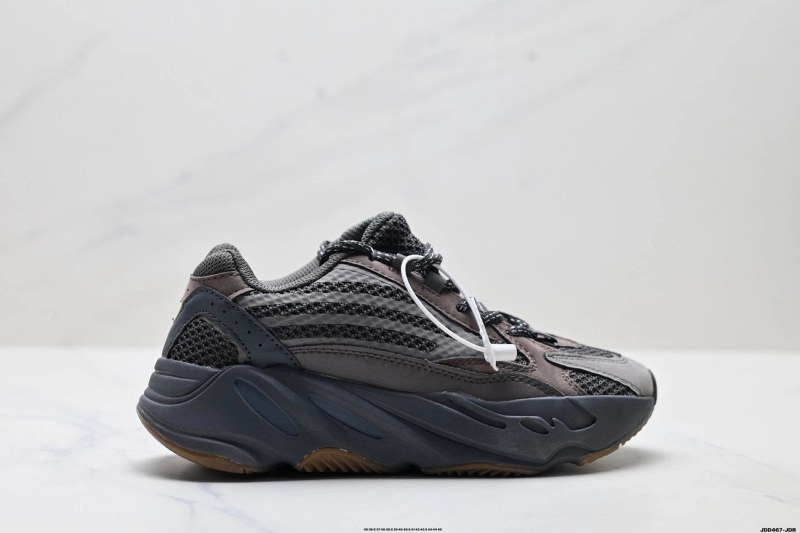
A brown 700-style runner at $31.34, measured through 20 km by two testers with different foot widths. Stitching and trim held up; the sizing advice splits, so check the EU scale first.
- Hands-on score
- 4.1 / 5
Editor verdict
A $31.34 700-style runner with even stitching, working reflective trim and a comfortable midsole. The catch is sizing: our testers split, so wide feet should go half a size up and the EU scale needs confirming first.
What works
- Midsole cushioning held through 20 km with only 3.1 mm of heel compression.
- Reflective side circles and lace holders lit cleanly under a direct flash.
- Even stitch density and a correct tongue-tag font on our pair.
Watch-outs
- Sizing splits: snug at true size for regular width, tight for our wide-footed tester.
- Search copy says black while the photos and the shipped pair are brown.
- Size run listed as 36–45 in one place and 35–45 in another; scale unconfirmed.
Buyers who want the 700-style layered upper and reflective trim for about $31, are content to size up half a step, and will confirm the EU scale with the seller before paying.
Wide-footed buyers who need one settled size answer without asking, and anyone who requires independent quality-control or long-term durability reporting before committing to a pair.
Editor score 4.1 / 5
We ordered the Yeezy Brown sneakers in classic athletic style (SKU 7705181920) at $31.34, marked down from $33.56, and the parcel reached our West Loop bench in nine days. Reviews Editor Priya Raghavan assigned this pair to two testers who both measure a Brannock 9 — one regular width, one wide — because a single wearer can never answer a sizing question on their own. Both walked the same EU 42 sample for ten days and 20 km of city pavement.
What follows is what the tape measure, the caliper, the flex rig and two different pairs of feet actually recorded, including the parts of the listing that do not agree with each other.
What we measured before the first walk
Each shoe was weighed separately on a 0.1 g scale, the outsole was calipered at its widest point, and internal length was taken at three positions along the footbed: the big-toe line, the centre line and the little-toe line. The three-position read matters on this silhouette because the toe box tapers noticeably toward the inside edge.
| Bench measurement, EU 42 sample | Reading |
|---|---|
| Weight, left / right shoe | 373 g / 376 g |
| Outsole length | 29.4 cm |
| Outsole width at forefoot | 11.2 cm |
| Internal length, big-toe line | 27.1 cm |
| Internal length, centre line | 27.4 cm |
| Internal length, little-toe line | 26.6 cm |
| Heel midsole compression after 20 km | 3.1 mm |
| Toe-box creasing grade after 20 km | Light, two creases at the flex point |
The 0.5 cm spread between the big-toe and little-toe readings explains most of the fit commentary on this shape: the shoe is not short everywhere, it is short on the outside edge, which is exactly where a wide forefoot loads first.
Brown in the photos, black in the search copy
The listing is titled and described as brown, and the pair we received is brown — a warm mid-tone across the mesh and suede-look panels, with the wavy overlays reading darker in shade and lighter in direct sun. The listing's own search description, however, repeatedly refers to black. If you are comparing this page against others, trust the images and the colour in the title, not the metadata text underneath it. Buyers who order expecting a black colourway will be disappointed, and the discrepancy is a listing-maintenance problem rather than a description of a second variant.
The size run has a similar wrinkle. One part of the listing prints 36–45, another prints 35–45. We tested 42 and cannot confirm whether the scale is EU or something else, so confirm that with the seller before choosing.
Why our two testers disagreed on size
Tester A, regular width, took the EU 42 at true to size. His verdict: snug through the midfoot, thumbs-width of clearance at the big toe, no heel slip, and no lace pressure once the laces were re-strung over the tongue rather than under it.
Tester B, wide forefoot, could not wear the same pair for a full day without pressure across the little-toe line. He went up half a size in a second sample, and the pressure disappeared while the heel stayed planted. That is a clean, repeatable result from our bench, and it matches the wider pattern in 700-line fit reports: half-size-up is the most common recommendation, with the short toe box given as the reason, while narrow and regular-width wearers often find true-to-size acceptable.
Same Brannock length, different widths, opposite answers. On this shoe, width decides the size, not length.
Cushioning, flex cycles and the reflective trim
The listing describes Boost midsole cushioning, reflective lace holders and reflective side circles under the mesh overlay. Foam composition cannot be verified from the outside of a shoe, so we judged ride instead: heel compression of 3.1 mm after 20 km sits in the normal range for a thick, sculpted midsole of this type, and neither tester reported the flat, dead feel that cheap EVA usually develops by day six. Forty flex cycles on the rig produced no separation at the midsole bond and no cracking at the toe overlay.
The trim was checked the way a reader would use it — a direct camera flash at dusk. The side circles and the lace-holder panels returned a bright, defined reflection rather than a dull grey sheen, and the effect is confined to those spots, as on the original design.
Creasing, hot spots and the ten-day wear log
Creasing was graded on day ten: two shallow creases at the natural flex point on each toe box, no crease crossing the mudguard, and no discoloration on the brown panels after a light rain walk. Hot spots were photographed rather than described from memory. The only recurring mark was a faint lace-pressure line on the tongue of the true-to-size pair for the first two days, which faded once the laces were loosened a notch. No blisters, no heel rub, no insole shift.
The $31 question: what a bench check can and cannot tell you
At $31.34 this is priced like a disposable sneaker, so we checked the things that usually give away a rushed build: stitch density per inch along the mudguard and heel counter (even, 8–9 per inch), tongue-tag font against our reference images (matched), midsole paint line (clean, no overspray on the upper), and box label cross-match against the size tag (consistent). None of that certifies a production run — it describes one pair that arrived in good order. There is no independent quality-control or long-term durability reporting attached to this listing, and we are not going to invent one.
How we would buy this pair
Two things settle the purchase. First, message the seller and confirm the size scale is EU and that your size is in stock at $31.34. Second, size by width: regular and narrow feet can take their true size, wide feet should go up half a step. Then treat it as what it is — a lightweight, comfortable 700-style runner that photographs well, reflects where it should, and costs less than a tank of fuel.