Black Hooded Tracksuit Flat-Lay: Color and Styling
Marcus Delgado · Editor in ChiefMarcus Delgado is Editor in Chief, covering Air Jordan silhouette history, retail launch timing, size-run fit mapping, and final score calls. They buy at retail where possible and use buying agents otherwise, filming the unboxing and checking the box label against the size tag. Marcus sets the final hands-on score after each ten-day wear block, with testing including 20 km of city pavement and a flex-cycle stress test they conduct personally. They sign off on the comparison table against two prior-year equivalents, connecting fit judgments, wear records, and comparisons.
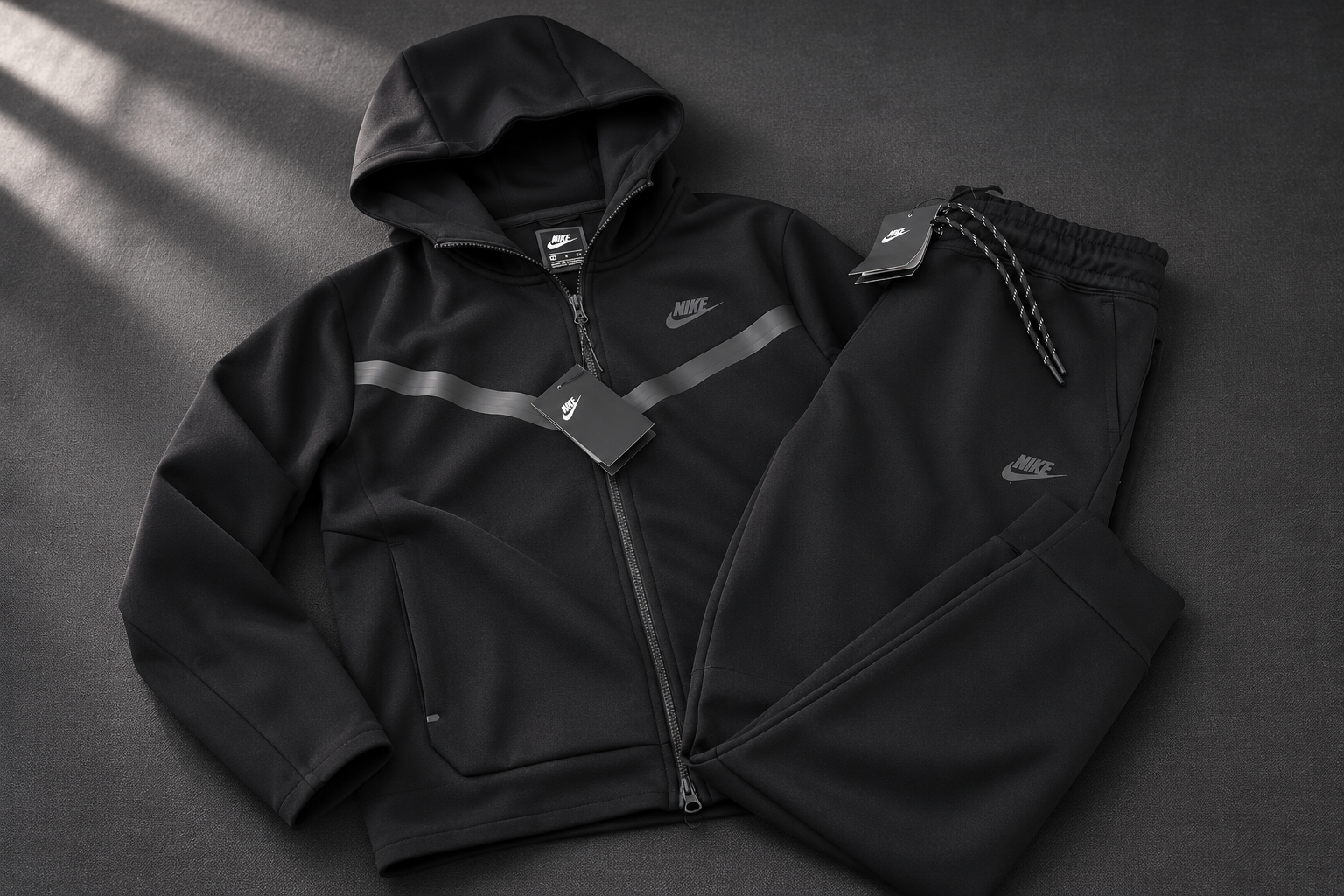
Overall Color: Creating a Unified Base with Black The zip-up hoodie and pants in the image are both black, forming a simple, coherent set. The gray horizontal decorative line on the chest breaks up the monotony of the large dark area and draws visual focus to the upper body. The partial gray pattern maintains a low contrast with the black fabric, keeping the overall look understated. To continue this color scheme, choose black, charcoal, or dark gray inner layers and shoes to maintain the set
Editor score 4.2 / 5
Overall Color: Creating a Unified Base with Black
The zip-up hoodie and pants in the image are both black, forming a simple, coherent set. The gray horizontal decorative line on the chest breaks up the monotony of the large dark area and draws visual focus to the upper body. The partial gray pattern maintains a low contrast with the black fabric, keeping the overall look understated.
To continue this color scheme, choose black, charcoal, or dark gray inner layers and shoes to maintain the set's integrity. For added depth, incorporate small areas of white, light gray, or silver gray accessories such as inner layers, socks, or soles, but avoid adding too many highly saturated colors at once.
Flat-Lay Display: Establish the Main Visual First, Then Arrange Supporting Lines
When laying flat, the jacket should serve as the main visual center. The hood, zipper, and chest's horizontal decorative line create a clear structure. The pants are placed diagonally to the right of the jacket, showcasing the leg silhouette while also avoiding completely covering the front details of the jacket. The waistband, drawstring, and leg patterns remain visible, helping to present the pairing relationship of the top and bottom.
You can arrange the composition in the following order:
- First, lay out the jacket flat, ensuring the hood, zipper, cuffs, and hem are clearly visible.
- Then place the pants to one side of the jacket, keeping the main lines of the waistband and legs visible, avoiding large areas covering the chest design.
- Maintain a certain directional sense in the garments' decorative lines, reducing wrinkles and messy overlaps.
- When choosing a dark gray or black background, use light and shadow differences to distinguish the clothing outlines.
- Details like hang tags and drawstrings can serve as small layered elements in the composition, but should not obscure the main patterns.

Styling Suggestions: Adjusting Contrast Around the Tracksuit
This black set pairs well with simple, clean-lined basics. For inner layers, opt for pure white, light gray, or same-tone black tops; white and light gray increase contrast, while black keeps the overall look more unified. For shoes, use black-and-white, all-black, or sneakers with subtle gray details to echo the gray decorative line on the jacket.
For a streetwear vibe, add a black cap or a simple dark crossbody bag. If you prefer a lighter visual feel, keep accessories within gray, silver, or white ranges, avoiding complex patterns that clash with the overall style.
Detail Assessment and Styling Boundaries
The image clearly shows the jacket's hood structure, full-zip front, long sleeves, ribbed cuffs, ribbed hem, and the horizontal gray decorative line on the chest; the pants show an elastic waistband, drawstring, and small leg pattern. From the flat-lay, you can judge the color relationship and display method, but you cannot determine the fit after wearing, actual size, fabric composition, thickness, lining feel, back design, or durability.
Therefore, when styling, you can plan inner layers and accessories based on the visible black-gray tones, decorative lines, and set relationship; regarding fit or wearing comfort, you cannot draw conclusions solely from this front flat-lay image.