Nanga Puffer QC: Color and Size Checks
Marcus Delgado · Editor in ChiefMarcus Delgado is Editor in Chief, covering Air Jordan silhouette history, retail launch timing, size-run fit mapping, and final score calls. They buy at retail where possible and use buying agents otherwise, filming the unboxing and checking the box label against the size tag. Marcus sets the final hands-on score after each ten-day wear block, with testing including 20 km of city pavement and a flex-cycle stress test they conduct personally. They sign off on the comparison table against two prior-year equivalents, connecting fit judgments, wear records, and comparisons.
First Confirm Which Product the QC Photos Correspond To This set of QC photos corresponds to the "NANGA multicolor puffer jacket collection" product page on Fashionreps, and they are accessed through the View QC Photos gallery on that product page. The currently verifiable QC page shows that this gallery contains one model: a hooded puffer jacket with a badge, marked with StoneIsland branding. It is not the brand homepage, c
Editor score 4.2 / 5
First Confirm Which Product the QC Photos Correspond To
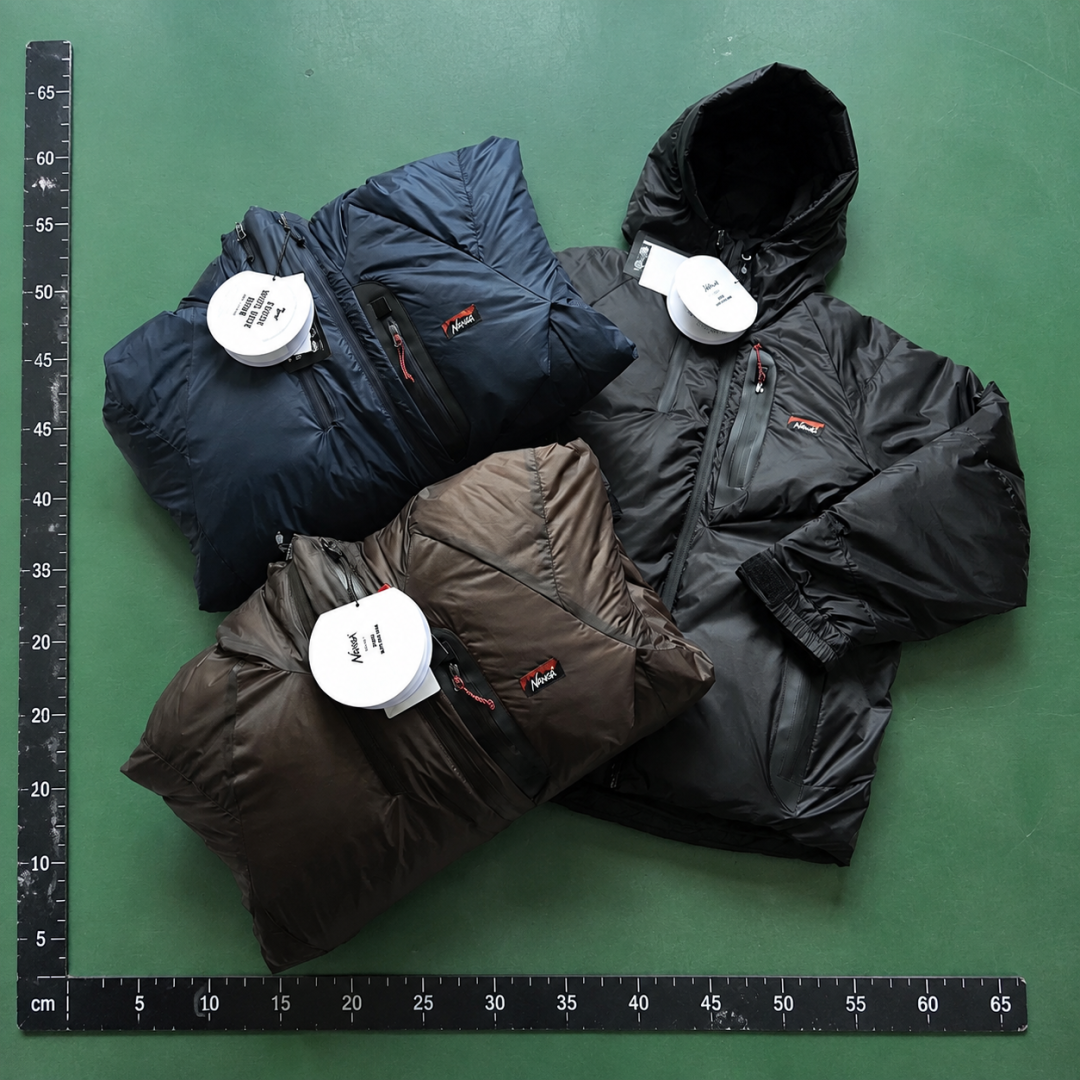
This set of QC photos corresponds to the "NANGA multicolor puffer jacket collection" product page on Fashionreps, and they are accessed through the View QC Photos gallery on that product page. The currently verifiable QC page shows that this gallery contains one model: a hooded puffer jacket with a badge, marked with StoneIsland branding. It is not the brand homepage, category page, or images of other products, so when checking, you should base it on this specific product and the selected variant.
The product information page describes this NANGA puffer jacket as black, navy blue, or dark brown, and lists a size range from S to XL; the specification text also mentions 2XL and 3XL, but does not provide complete size data for them. The page also lists a 15dn AURORA TEX LIGHT outer layer, 10dn recycled nylon lining, and 260g, 860FP fill specifications. These are product page specifications and cannot be considered as independently measured or verified based solely on QC photos.

Caption: This image is a thematic illustration for the QC topic of the corresponding product and does not replace the actual QC photos on the Fashionreps product page; it is an illustration, not physical, QC, or hands-on evidence.
Round One: Match Colors and Variants
First, record the color, model, and size selected in the order, then examine the QC photos one by one. Do not assume all photos belong to the same color just because the product title contains "multicolor," nor use display images from the product detail page instead of QC photos.
Focus on checking the following:
- Whether the main color of the outer shell matches the order selection, especially observing the body, hood, sleeves, and sides for noticeable color differences under different lighting.
- Whether the left and right panels, hood, and sleeves belong to the same color combination, to avoid mixing photos of different variants when judging.
- Whether the position, color, and shape of badges, prints, or brand logos match the model indicated on the page.
- Whether the photos show the entire body; if only partial images are available, the overall color scheme of the jacket cannot be confirmed.
- Whether there are obvious wrong colors, wrong model details, or decorations inconsistent with the selected variant.
QC photos can support "whether the colors and appearance seen in these photos match the selected variant." They cannot prove authenticity, nor guarantee that there will be no color difference in natural light after receipt.
Round Two: Check Quilting, Fill, and Outer Layer Details
Examine the front, back, sides, and sleeves separately, not just the main front view. The visible evidence of a puffer jacket mainly comes from whether the quilting is continuous, whether the outer layer has obvious abnormalities, and whether the fill shows large-scale unevenness in the photos.
You can check in this order:
- Check whether the quilted compartments are continuous, and whether the stitching has obvious skipped stitches, broken threads, crookedness, or sudden interruptions.
- Compare the left and right panels and sleeves to observe whether the fill has obvious collapse, clumping, or excessive bulging in one area.
- Check the outer layer for visible stains, scratches, damage, creases, or abnormal reflections.
- Check the connection points such as the hood, shoulders, underarms, and cuffs to confirm there is no obvious open stitching or fabric distortion in the photos.
- If the image resolution is insufficient to see the stitching or fill distribution clearly, mark that item as "unable to confirm" rather than judging it as acceptable.
The 260g fill weight, 860FP, and outer layer protective parameters listed on the page are specification descriptions in the product information. Without independent testing or clear QC photo support, these numbers cannot be rewritten as guarantees of warmth, waterproofing, or durability.
Round Three: Check Zippers, Cuffs, and Logos
Hardware and closure areas need to be examined separately, because a distant front view usually cannot show details. When enlarging QC photos, prioritize checking:
- Whether the main zipper is complete, and whether the pull, teeth, and zipper tape have obvious gaps or deformation.
- Whether the zipper is visibly crooked, wrinkled, or misaligned on both sides after closure.
- Whether the cuffs are symmetrical, and whether the elastic structure or attachment has obvious loose threads.
- Whether the stitching at the hood opening, hem, and front placket is continuous.
- Whether badges, prints, or other logos have obvious misalignment, detached edges, fraying, or unclear embossing.
These checks can only be used to record the visible appearance in the photos. They cannot alone prove long-term reliability of the zipper, nor can they prove that the logos have brand authentication significance.
Round Four: Separate Size Evidence into "Labels" and "Flat Measurements"
Size judgment cannot rely solely on the letter label on the garment. The product information page reminds that NANGA uses the Japanese sizing system, and the independent size tip on the page considers JP S to be roughly equivalent to US XS, so directly ordering based on your usual US letter size may cause deviation.
When confirming size, record three types of evidence separately:
- Size label: Check whether the QC photos can read labels such as S, M, L, or XL, and whether the label matches the ordered size.
- Flat measurements: Check whether there are measurement photos for chest width, body length, and raglan sleeve length in centimeters, and record the actual readable numbers in the photos.
- Body reference: The product information page also provides tips for selecting based on weight ranges, but the original information uses jin as the unit and cannot be directly applied to weight habits in other regions without conversion.
If the QC photos do not clearly show the size label, or there are no readable flat measurements in centimeters, you can only confirm that "the photos do not provide sufficient size evidence." You cannot infer actual wearing effect just because the garment looks loose or fitted.
The product information mentions that the size chart covers S to XL, while the specification text mentions 2XL and 3XL, but does not provide complete measurement data for these two sizes. If you need a larger size, you should first ask the seller for corresponding chest width, body length, and sleeve length data before deciding to confirm.
When to Pause Confirmation
If any of the following situations occur, it is recommended to hold the QC task and not confirm based solely on existing photos:
- The photos show colors, badges, or models inconsistent with the order selection.
- There is obvious collapse, severe clumping, or large shadows in the fill areas that cannot be judged.
- The main zipper, cuffs, hem, or key seams lack clear close-up photos.
- The size label is inconsistent with the ordered size, or the label cannot be read at all.
- Flat measurement photos are missing, or the numbers are too blurry to verify.
- There are too few photos to view the back, sides, hood, and cuffs.
- Stains, damage, open stitching, misprints, or other visible defects are found that may affect the decision to accept the item.
At this point, you can request additional photos from the seller, specifying which side, which part, and what angle is needed. For size issues, prioritize requesting photos of chest width, body length, and sleeve length with a measuring tape; for color issues, request photos that show the entire garment and the label at the same time; for defect issues, request close-up, unobstructed detail photos.
Conclusion: Verify Evidence First, Then Decide Whether to Confirm
The key to QC checking this NANGA puffer jacket is not to rewrite the specifications from the product information, but to confirm whether the photos correspond to the correct variant and to check whether the color, quilting, outer layer, hardware, logos, and size evidence are complete.
If the color and model match, key areas have no visible abnormalities, and the size label and flat measurements in centimeters corroborate each other, you can proceed to the next step of confirmation. If size measurements, fill details, or close-up photos of key areas are missing, write the conclusion as "insufficient evidence" and request additional photos first. The available information does not provide independent verification of warmth, waterproofing, durability, or authenticity, so QC photos should not be treated as guarantees in these aspects.