Vans Winter Skate Shoes: Upper and Walking Fit
Marcus Delgado · Editor in ChiefMarcus Delgado is Editor in Chief, covering Air Jordan silhouette history, retail launch timing, size-run fit mapping, and final score calls. They buy at retail where possible and use buying agents otherwise, filming the unboxing and checking the box label against the size tag. Marcus sets the final hands-on score after each ten-day wear block, with testing including 20 km of city pavement and a flex-cycle stress test they conduct personally. They sign off on the comparison table against two prior-year equivalents, connecting fit judgments, wear records, and comparisons.
Verification date: October 17, 2026. The problem this article addresses is: When you're ready to buy Vans-style fall/winter skate shoes but are unsure about the upper materials, panel construction, collar height, and daily walking adaptability, how can you complete a pre-purchase check based on visible evidence on the product page? After reading, you should be able to compile your own verification checklist and determine whether the current page is sufficient to support a purchase decision. This
Editor score 4.2 / 5
Verification date: October 17, 2026. The problem this article addresses is: When you're ready to buy Vans-style fall/winter skate shoes but are unsure about the upper materials, panel construction, collar height, and daily walking adaptability, how can you complete a pre-purchase check based on visible evidence on the product page? After reading, you should be able to compile your own verification checklist and determine whether the current page is sufficient to support a purchase decision. This article is not a substitute for physical inspection, and you cannot confirm warmth, water resistance, or long-term durability solely from the main product image. 🧭

What Daily Use Problem This Vans Product Evaluation Aims to Solve
When buying skate shoes for fall/winter, what you really need to confirm is usually not "does it look like a skate shoe," but whether it can handle your daily walking tasks: commuting, walking around campus, short outings, or the occasional light skate session on dry pavement.
This evaluation focuses on four questions:
- What visible materials make up the upper, and are the panel locations clear.
- Whether the lace area, collar, and shaft height match your wearing habits.
- Whether the page evidence supports judgments for daily walking scenarios.
- What information must be further confirmed with the seller or shopping agent and cannot be inferred from images.
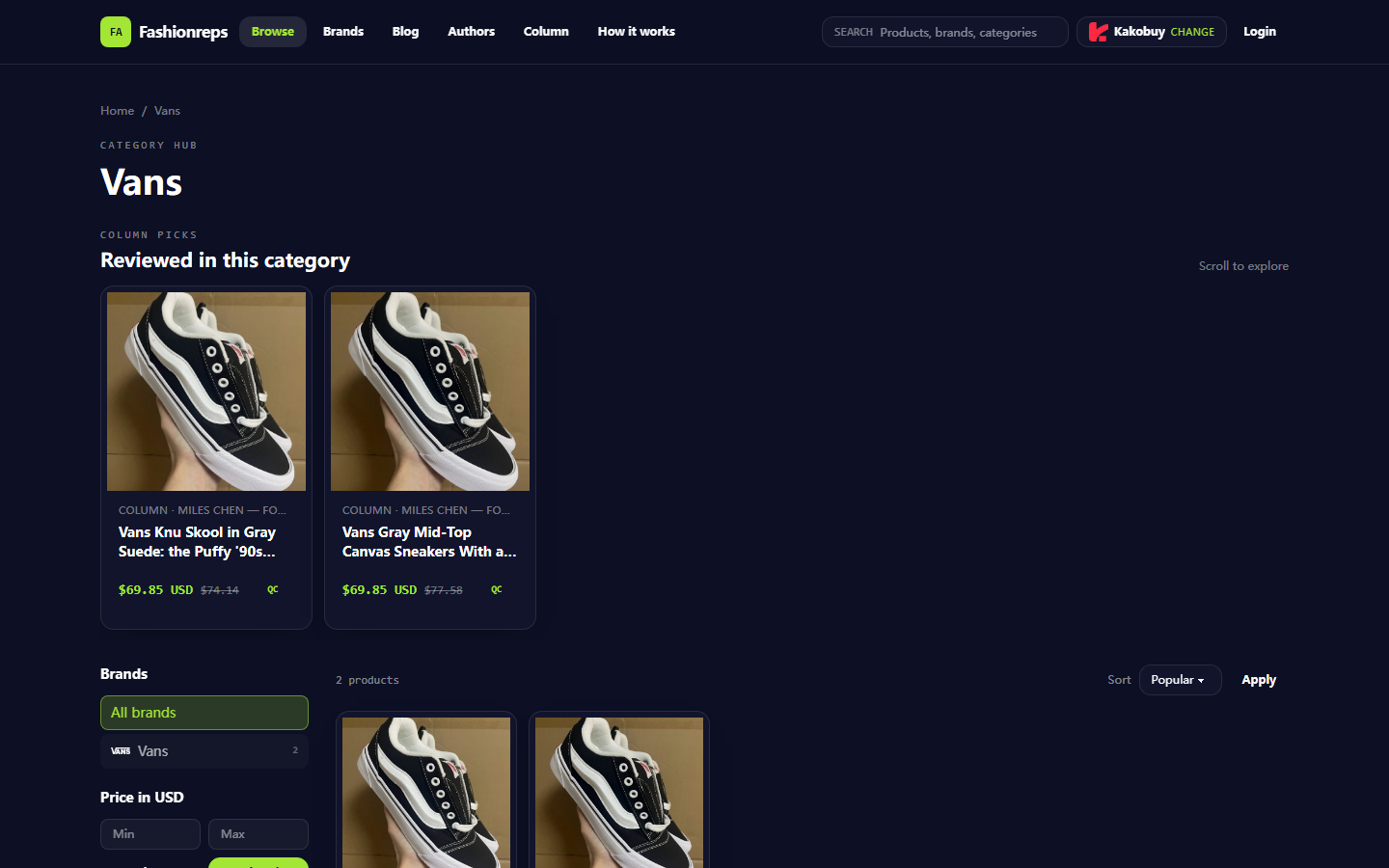
Currently, the Fashionreps Vans category page shows two target products: a gray suede Knu Skool low-top and a gray canvas mid-top. The category page shows the product names, reference prices, and some basic descriptions, but cannot directly prove the warmth, waterproofing, feel, or durability of the two shoes.
Confirm the Style, Sizing, and Color Options on the Target Skate Shoe Page
The information for the two products recorded on the category page is as follows:
| Visible info on product page | Gray Suede Knu Skool Low-Top | Gray Canvas Mid-Top |
|---|---|---|
| Page name | Vans Knu Skool in Gray Suede | Vans Gray Mid-Top Canvas Sneakers With a Rubber Sole |
| Structural clues | Low-top, gray suede, chunkier retro skate shoe silhouette | Mid-top, gray canvas, rubber sole |
| Sizes shown on page | The current category page does not show the full size range | Page shows full size range 35–45 |
| Page recorded reference price | $69.85 | $69.85 |
| Page recorded previous reference price | $74.14 | $77.58 |
The prices here are reference prices recorded on the page and do not equal the final settlement amount. The actual payment may also be affected by size, stock, shopping agent service fees, domestic shipping, international shipping, taxes, and destination country customs requirements. Before ordering, you should reopen the specific product page to check whether the price, stock, color, and size are still available.
Style names cannot replace product details. For example, "suede" only indicates the page's naming of the upper material and does not further prove the suede thickness, treatment process, or rain resistance; "canvas mid-top" can help determine the structural direction, but you still need to check the shaft height, collar padding, and side detail images.
Check Upper Paneling, Lace Area, Collar, and Visible Structure
After opening the specific product page, it is recommended to examine the images and text from the outside inward, not just the first main image.
First, look at the upper paneling. Confirm whether there are clear divisions for the forefoot, side panels, heel, and toe. If the seam lines appear only from one angle, it is best to continue looking for side, top-down, and heel images. For the suede model, focus on whether the suede area covers the toe, side, or around the laces; for the canvas model, confirm whether the canvas area extends to the collar and whether there are clear boundaries between different materials.
Second, look at the lace area. You need to confirm the number of eyelets, the lace coverage, whether the tongue is separate, and whether the laces will press on the instep. The visible position of the eyelets and tongue can only help judge the external structure; it cannot directly prove the internal support or wearing stability. 👟
Third, look at the collar and shaft. Low-top models usually make it easier to observe ankle room, while mid-top models require special attention to shaft height, collar padding, and heel wrap. If the page does not have a rear view or on-foot photo, you should not infer whether the collar is soft, whether it will rub, or whether it is suitable for thick socks.
Finally, look at the connection between the sole and upper. Confirm whether the sidewall height, rubber foxing, and toe cap wrap are clearly visible in the images. If the image resolution is insufficient or the sole edge is cropped, record "sole structure not fully confirmed" rather than substituting common Vans design for the current product evidence.
Map Skate Style Page Info to Daily Walking Scenarios
Skate style does not mean it is suitable for all daily walking scenarios. When judging, you should convert page evidence into specific use conditions.
If the main use is short-distance city walking, the key points for the low-top model are the upper flex zone, lace fastening method, heel structure, and sole contact shape. If the page provides clear side and sole images, you can complete the structural appearance check; if there is no size chart or insole length information, you still need to supplement the correspondence between foot length and size.
If the main use is fall/winter commuting, the mid-top model's shaft height may be more suitable for users who want more coverage, but that does not mean it is necessarily warmer. Warmth is also related to inner lining material, padding thickness, sock thickness, temperature, and walking time. When the page does not have clear inner lining information, at most you can write "the mid-top structure may increase coverage area," not "suitable for severe cold" or "has thermal insulation performance."
If you need to walk on wet roads, you should separately check the upper treatment, tongue structure, sole tread pattern, and whether the page has waterproof instructions. Without clear waterproof testing or official material statements, do not equate suede, canvas, or rubber soles directly with waterproofing. 🌧️
If light skate use is needed, you should further check the sole grip pattern, toe wear area, upper reinforcement, and lace protection. The current category page only provides limited product naming and basic descriptions, which cannot complete a professional skate performance judgment.
Record What the Sole, Upper, and Lining Can Be Proven by Images
It is recommended to divide the verification results into three categories: "clearly stated on the page," "visible in images," and "still to be confirmed."
Clearly stated on the page includes the product name, color description, shoe type direction, partial size range, and page reference price. For example, the gray suede Knu Skool page clearly includes Gray Suede and low-top skate shoe orientation; the gray mid-top page clearly includes Gray, Mid-Top, Canvas, Rubber Sole, and shows a size range of 35–45.
Visible in images needs to be recorded image by image, such as shaft height, upper panel locations, lace area, sole sidewall, and toe cap wrap. When recording, describe only the shape you can see, and do not expand visual impressions into material performance. You can write "the image shows rubber toe cap wrap," but not "toe wear resistance has been verified."
Still to be confirmed includes:
- Specific size corresponding to insole length and width.
- Upper material composition, thickness, and surface treatment.
- Inner lining material, padding, and whether there is a fall/winter fleece version.
- Sole hardness, tread depth, and wear performance.
- Actual stock, shipping time, return/exchange conditions, and inspection photos.
For the sole, upper, and lining, it is best to request actual or QC photos corresponding to the target size and target color. Generic style images can only help identify the structure, but cannot prove the specific condition of the product you will ultimately receive.
Distinguish User Feedback Clues from Target Site Product Facts
User feedback can help discover risks that need attention, but cannot directly replace target product page facts. For example, if someone mentions that a certain shoe runs large, the collar rubs, or the sole is hard, these contents can only serve as clues for size and comfort checks. Unless the feedback clearly corresponds to the same product, same version, and similar size, you should not treat it as an absolute conclusion for the current page.
The confirmable target site facts this time mainly come from the Fashionreps Vans category page: the page lists two Vans products, showing product names, reference prices, and a 35–45 size range for one of them. The category page also states that the platform is used for discovering products, viewing reviews, and comparing shopping agents, and that orders, payments, and shipping are handled by external agent websites. Therefore, the final cost, warehouse inspection method, international shipping, and after-sales conditions must be confirmed again on the actual shopping agent page.
If you collect reviews or discussions later, record the product, posting time, size, and full reading status corresponding to the review. Discussions that cannot be fully read can only be marked as partial clues, not summarized as the common experience of all users. 💬
How Warmth, Water Resistance, and Comfort Cannot Be Inferred for Fall/Winter Wear
You cannot infer that a product has winter warmth features just because the product name contains "Winter" or the article topic involves fall/winter. The currently visible information does not prove whether the shoe has a fleece lining, thick inner lining, thermal insulation filling, or specific low-temperature testing.
You cannot infer that it can resist rain just because the upper says suede or canvas. The moisture resistance of suede and canvas depends on specific treatment, seams, tongue structure, and usage environment. Without clear waterproof instructions, treat it as a regular upper treatment and avoid using it in continuous rain, standing water, or snow.
You cannot judge comfort solely from the main image. Comfort is affected by foot shape, forefoot width, insole, sole hardness, collar padding, socks, and walking distance. When the page lacks this information, prioritize supplementing insole length, width, and return/exchange conditions rather than directly choosing your usual size.
Also, you cannot equate a rubber sole with slip resistance. Suitability for wet conditions depends on tread pattern, rubber compound, wear state, and ground conditions. When the product page has no relevant testing, you should retain uncertainty.
Evidence Completeness Check Before Ordering and Next Steps
Before ordering, you can use the following checklist for a final check:
- The specific product page still opens, and the product name, color, and style match the target.
- The target size is available, and you have obtained insole length or size chart information.
- You have seen images of the toe, side, heel, lace area, collar, and sole.
- You have distinguished between page facts, image observations, and personal use inferences.
- You have confirmed whether the price is a reference price or settlement price, and checked additional fee descriptions.
- You have confirmed stock, shipping, warehouse inspection, return/exchange, and after-sales conditions.
- You have not made assumptions beyond the evidence regarding warmth, waterproofing, slip resistance, and long-term wear performance.
If you can only confirm the product name and one main image, it is advisable not to order yet and continue to request a size chart, detail images, and QC photos of the target version. If the page can confirm structure, size, and color, but cannot confirm waterproofing or warmth, you can evaluate it as a regular fall/winter transitional shoe rather than a functional winter shoe.
The final judgment should be tied to the use scenario: the gray low-top suede model is more suitable for prioritizing checks on the low-top silhouette, lace area, and daily use on dry surfaces; the gray canvas mid-top model is more suitable for prioritizing checks on shaft height, the 35–45 size range, and collar space. The page recorded reference price for both is $69.85, but this does not represent the final savings amount. Only after the current settlement price, agent fees, shipping, and potential taxes have been fully checked can you calculate the true cost.
This verification found no evidence that either model has additional warmth, waterproofing, or professional skate performance. It is suitable for buyers willing to first check images, sizes, and costs; it is not recommended for users who need waterproof commuting, severe cold warmth, or professional skate protection to directly use the page name as the basis for purchase.